History of Nova Scotia
with special attention given to
Communications and Transportation
Chapter 82
2006 January onward
Index with links to the other chapters
2006 April 12
960 CHNS abandons AM for the FM band
The AM dial is on its final legs in Halifax
Radio in Halifax is changing and life on the AM dial will never be the same as 960 CHNS is abandoning ship for the more lucrative FM band. CHNS has a long history on the AM band, but reality bites as the vast majority of radio listeners abandoned the AM band several years ago. CHNS will be moving to 89.9 MHz with an effective radiated power of 100,000 watts. During the transition period, the CRTC ruled that the broadcaster will be allowed to simulcast the programming of the new FM station on CHNS for a period of three months following the commencement of operations of their FM station.
The format is changing too. With the move to FM, CHNS will dump the stale and long-in-the-tooth oldies format for a more commercial Adult Contemporary music format with a mix of locally relevant programming service that is community-centred and community-driven.
With CHNS moving out, Halifax will be left with just two local AM stations clinging for life in a market with very few listeners and slick FM competition and the new 'HOT' Canadian Satellite Radio networks Sirius and XM picking off their listeners on a daily basis.
The recently released spring radio ratings show 920 CJCH at the bottom of the heap in the AM market with a market share of 2.7 down from 3.3 in the fall 2005 ratings. CFDR AM (780/KIXX) sits at 3.9 down from 4.3 and rounding out the AM ratings, CHNS AM sits in second with a 3.5 down from 3.7. All three AM stations suffered losses over the previous period. The writing appears to be on the wall, the AM dial is on its final legs in Halifax.
Rating for the remaining two AM broadcasters in Halifax will likely continue to plummet as CHNS takes a large chunk of the AM audience with them into the future of Halifax radio.
|
The Wayback Machine has archived copies of this news item:
960 CHNS abandons AM for the FM band
Archived: 2006 April 19
http://web.archive.org/web/20060419225622/http://www.halifaxlive.com/content/view/664/2/
Archived: 2006 June 29
http://web.archive.org/web/20060629232413/http://www.halifaxlive.com/content/view/664/2/
Archived: 2006 October 30
http://web.archive.org/web/20061030100925/http://www.halifaxlive.com/content/view/664/2/
These links were accessed and found to be valid on 20 August 2010.
|
Below are the most recent radio ratings in the Halifax market
Source: See archived news article above
2006 May 18
250th Anniversary
England Declares War on France
18 May 1756
The Seven Years War
On 18 May 1756, England formally declared war on
France. This war is known as the Seven Years War in Canada and
Europe, but in the United States it is called the French and Indian
War. In 1756, France controlled far more territory in North
America than England did — five years later this had changed forever,
with England having taken all of France's territory on mainland North
America.
Seven Years War Timeline
http://ns1763.ca/remem/7yw-timeline-w.html
The Seven Years War, 1756-1763, was a worldwide
war fought in Europe, North America, and India between France, Austria,
Russia, Saxony, Sweden, and Spain on the one side and Prussia, Great
Britain, and Hanover on the other.
2006 June 11 (Two days before the election)
Nova Scotia
Provincial General Election
Political Websites
Parties are listed below in the order of their standings
in the Legislature just before the election was called.
Progressive Conservative Party of Nova Scotia
http://www.pcparty.ns.ca/
http://www.rodneymacdonald.ca/
52 candidates
|
- Annapolis: Blair Hannam
No website
E-mail: blair.hannam@ns.aliantzinc.ca
- Antigonish: Angus MacIsaac
No website
No e-mail
- Argyle: Chris d'Entremont
Website: http://www.chrisforargyle.com/
E-mail: office@chrisforargyle.com
- Bedford: Len Goucher
Website: http://www.lengoucher.com/
E-mail: lengouchercampaign@ns.aliantzinc.ca
Blog: http://lengoucher.blogspot.com/
- Cape Breton Centre: Darren Bruckschwaiger
Website: http://www.darrenb.org/
E-mail: darrenb@darrenb.org
- Cape Breton North: Cecil Clarke
No website
E-mail: cecilclarke@ns.sympatico.ca
- Cape Breton Nova: Todd Marsman
Website: http://www.toddmarsman.com/
E-mail: marsman@ns.sympatico.ca
- Cape Breton South: Scott Boyd
Website: http://www.scott-boyd.ca/
E-mail: capebretonsouth@gmail.com
- Cape Breton West: Alfie MacLeod
No website
E-mail: capebretonwest@gmail.com
- Chester-St. Margarets: Judy Streatch
Website: http://www.voteforjudy.ca/
E-mail: judy@voteforjudy.ca
- Clare: Arnold LeBlanc
Website: http://www.clarepc.ca/
Website: http://www3.ns.sympatico.ca/marcpoirier/index2.htm
E-mail: arnoldleblanc@clarepc.ca
- Colchester - Musquodoboit Valley: Brooke Taylor
No website
E-mail: brooketaylorcampaign@ns.aliantzinc.ca
- Colchester North: Karen Casey
No website
E-mail: karencasey@ns.aliantzinc.ca
- Cole Harbour: Sheila McKeand
No website
E-mail: coleharbourpc@ns.aliantzinc.ca
- Cole Harbour - Eastern Passage: Don McIver
No website
E-mail: donmciverpcoffice@ns.aliantzinc.ca
- Cumberland North: Ernest Fage
No website
No e-mail
- Cumberland South: Murray Scott
No website
E-mail: murrayscott@eastlink.ca
- Dartmouth East: Jim Cormier
Website: http://www.cormier2006.com/
E-mail: jimcormier@ns.aliantzinc.ca
- Dartmouth North: Troy Myers
Website: http://www.troymyers.ca/
E-mail: info@troymyers.ca
- Dartmouth South - Portland Valley: Tim Olive
No website
E-mail: dspv@ns.sympatico.ca
- Digby - Annapolis: Jimmy MacAlpine
No website
E-mail: digbyannapolispc@eastlink.ca
- Eastern Shore: Bill Dooks
No website
E-mail: electbilldooks@ns.sympatico.ca
- Glace Bay: Mark Bettens
No website
E-mail: m.bettens@ns.sympatico.ca
- Guysborough - Sheet Harbour: Ron Chisholm
No website
E-mail: re_electronchisholm@ns.aliantzinc.ca
- Halifax Atlantic: Bruce Cooke
No website
No e-mail
- Halifax Chebucto: Sean Phillips
No website
E-mail: seanphillips@eastlink.ca
- Halifax Citadel: Bill Black
Website: http://www.billblack.ca/
E-mail: bill@billblack.ca
- Halifax Clayton Park: Mary Ann McGrath
No website
E-mail: maryann@votemaryann.ca
- Halifax Fairview: Bruce MacCharles
No website
E-mail: bmaccharles@ns.sympatico.ca
- Halifax Needham: Andrew Black
Website: http://www.andrewblack.org/
E-mail: info@andrewblack.org
- Hammonds Plains - Upper Sackville: Barry Barnet
No website
E-mail: bbcampaign@eastlink.ca
- Hants East: Wayne Fiander
Website: http://www.waynefiander.ca/
E-mail: wayne@waynefiander.ca
- Hants West: Chuck Porter
Website: http://www.chuckporter.ca/
E-mail: chuck@chuckporter.ca
E-mail: chuck.porter@ns.aliantzinc.ca
- Inverness: Rodney MacDonald
No website
No e-mail
- Kings North: Mark Parent
Website: http://www.markparent.ca/
E-mail: markparentcampaign@gmail.com
- Kings South: David Morse
Website: http://www.davidmorse.ca/
E-mail: morse@ns.sympatico.ca
- Kings West: John Prall
Website: http://www.johnprall.ca/
E-mail:
- Lunenburg: Michael Baker
No website
E-mail: electmichaelbaker@ns.aliantzinc.ca
- Lunenburg West: Carolyn Bolivar-Getson
Website: http://www.lunenburgwest.pcparty.ns.ca/
Website: http://users.eastlink.ca/~bolivargetson/
E-mail: bolivargetson@eastlink.ca
E-mail: cbolivargetson@eastlink.ca
- Pictou Centre: Pat Dunn
Website: http://www.patdunn.ca/
E-mail: patdunn@ns.aliantzinc.ca
- Pictou East: Sue Uhren
No website
E-mail: pcpictoueast@ns.aliantzinc.ca
- Pictou West: Ronald Baillie
No website
E-mail: pictouwestpc@ns.aliantzinc.ca
- Preston: Dwayne Provo
Website: http://www.dwayneprovo.ca/
E-mail: provopchq@eastlink.ca
- Queens: Kerry Morash
No website
E-mail: kerrymorash@ns.aliant.zinc.ca
- Richmond: John Greene
No website
E-mail: johngreenepc@ns.aliantzinc.ca
- Sackville - Cobequid: Steve Craig
Website: http://www.stevecraig.ca/
E-mail:
- Shelburne: Eddie Nickerson
No website
No e-mail
- Timberlea - Prospect: Juanita Cirtwill
Website: http://www.rodneymacdonald.ca/content/view/71/160/
E-mail: juanita@juanitacirtwill.ca
- Truro - Bible Hill: Jamie Muir
Website: http://www.jamiemuir.ca/
E-mail: info@jamiemuir.ca
- Victoria - The Lakes: Keith Bain
No website
E-mail: baincampaign2006@gmail.com
- Waverley - Fall River - Beaver Bank: Gary Hines
Website: http://www.garyhines.ca/
E-mail: gary.hines@ns.aliantzinc.ca
- Yarmouth: Richard Hurlburt
No website
E-mail: hurlburtpccampaign@ns.aliantzinc.ca
New Democratic Party of Nova Scotia
http://www.ns.ndp.ca/
52 candidates
|
- Annapolis: Calum MacKenzie
No website
E-mail: calummackenzie@nsndp.ca
- Antigonish: Andrew MacDonald
No website
E-mail: andrewmacdonald@nsndp.ca
- Argyle: Charles Muise
No website
E-mail: charlesmuise@nsndp.ca
- Bedford: John Buckland
No website
E-mail: johnbuckland@nsndp.ca
- Cape Breton Centre: Frank Corbett
No website
E-mail: frankcorbett@ns.ndp.ca
- Cape Breton North: Russell MacDonald
Website: http://www.russellmacdonald.ca/
E-mail: info@russellmacdonald.ca
Blog: http://www.russellmacdonald.ca/blog.php
- Cape Breton Nova: Gordie Gosse
No website
E-mail: gordiegosse@nsndp.ca
- Cape Breton South: Jamie Crane
Website: http://www.jamiecrane.ca/
E-mail: info@jamiecrane.ca
Blog: http://www.jamiecrane.ca/blog.html
- Cape Breton West: Terry Crawley
No website
E-mail: terrycrawley@nsndp.ca
- Chester-St. Margarets: Jane Matheson
No website
E-mail: janematheson@nsndp.ca
- Clare: Paul Comeau
No website
E-mail: paulcomeau@nsndp.ca
- Colchester - Musquodoboit Valley: Gary Burrill
No website
E-mail: garyburrill@nsndp.ca
- Colchester North: Rob Assels
No website
E-mail: robassels@nsndp.ca
- Cole Harbour: Darrell Dexter
No website
E-mail: darrelldexter@nsndp.ca
- Cole Harbour - Eastern Passage: Kevin Deveaux
No website
E-mail: kevindeveaux@nsndp.ca
- Cumberland North: Kim Cail
No website
E-mail: kimcail@nsndp.ca
- Cumberland South: Andrew Kernohan
No website
E-mail: andrewkernohan@nsndp.ca
- Dartmouth East: Joan Massey
No website
E-mail: joanmassey@nsndp.ca
- Dartmouth North: Trevor Zinck
No website
E-mail: trevorzinck@nsndp.ca
- Dartmouth South - Portland Valley: Marilyn More
No website
E-mail: marilynmore@nsndp.ca
- Digby - Annapolis: Andrew Oliver
No website
E-mail: andrewoliver@nsndp.ca
- Eastern Shore: Sidney Prest
No website
E-mail: sidneyprest@nsndp.ca
- Glace Bay: Myrtle Turnbull-Campbell
No website
E-mail: myrtlecampbell@nsndp.ca
- Guysborough - Sheet Harbour: Jim Boudreau
Website: http://www3.ns.sympatico.ca/west_pana/Election.html
E-mail: jimboudreau@nsndp.ca
- Halifax Atlantic: Michele Raymond
No website
E-mail: raymond@nsndp.ca
- Halifax Chebucto: Howard Epstein
No website
E-mail: howardepstein@nsndp.ca
- Halifax Citadel: Leonard Preyra
No website
E-mail: preyra@ns.ndp.ca
- Halifax Clayton Park: Linda Power
No website
E-mail: lindapower@nsndp.ca
- Halifax Fairview: Graham Steele
Website: http://www.grahamsteele.ca/
E-mail: graham@grahamsteele.ca
E-mail: grahamsteele@nsndp.ca
Blog: http://www.grahamsteele.blogspot.com/
- Halifax Needham: Maureen MacDonald
No website
E-mail: maureenmacdonald@nsndp.ca
- Hammonds Plains - Upper Sackville: Mat Whynott
Website: http://www.matwhynott.ca/
E-mail: electmat@ns.sympatico.ca
E-mail: matwhynott@nsndp.ca
- Hants East: John MacDonell
No website
E-mail: johnmacdonell@nsndp.ca
- Hants West: Sean Bennett
Website: http://www.seanbennett.9k.com/
E-mail: seanbennett@ns.ndp.ca
- Inverness: Tim Murphy
No website
E-mail: timmurphy@nsndp.ca
- Kings North: Jim Morton
Website: http://www.kingsnorthndp.ca/
E-mail: kingsnorthndp@ns.sympatico.ca
E-mail: jimmorton@nsndp.ca
- Kings South: David Mangle
No website
E-mail: davidmangle@nsndp.ca
- Kings West: Greg Hubbert
No website
E-mail: kingswestndp@ns.aliantzinc.ca
- Lunenburg: Chris Heide
No website
E-mail: chrisheide@nsndp.ca
- Lunenburg West: Dr. William (Bill) Smith
Website: http://www.lunenburgwestndp.ca/
E-mail: billsmith@ns.ndp.ca
E-mail: billsmith@nsndp.ca
- Pictou Centre: Danny MacGillivray
Website: http://www.dannyndp.ca/
E-mail: info@dannyndp.ca
E-mail: dannymacgillivray@nsndp.ca
Blog: http://www.dannyndp.ca/blog.html
- Pictou East: Clarrie MacKinnon
No website
E-mail: clarriemackinnon@ns.ndp.ca
- Pictou West: Charlie Parker
Website: http://www.charliendp.ca/
E-mail: charlie@charliendp.ca
E-mail: charlieparker@nsndp.ca
- Preston: Douglas Sparks
No website
E-mail: dougsparks@nsndp.ca
- Queens: Vicki Conrad
No website
E-mail: vickiconrad@nsndp.ca
- Richmond: Mary Pat Cude
No website
E-mail: marypatcude@nsndp.ca
- Sackville - Cobequid: Dave Wilson
No website
E-mail: davewilson@nsndp.ca
- Shelburne: Sterling Beliveau
No website
E-mail: sterlingbelliveau@ns.ndp.ca
- Timberlea - Prospect: Bill Estabrooks
No website
E-mail: billestabrooks@nsndp.ca
- Truro - Bible Hill: Jim Harpell
Website: http://www.jimharpell.ca/
E-mail: jim@jimharpell.ca
E-mail: jimharpell@nsndp.ca
- Victoria - The Lakes: Joan Oliari
No website
E-mail: joanoliari@nsndp.ca
- Waverley - Fall River - Beaver Bank: Percy Paris
No website
E-mail: percyparis@nsndp.ca
- Yarmouth: John Deveau
No website
E-mail: johndeveau@nsndp.ca
Liberal Party of Nova Scotia
http://www.liberal.ns.ca/
http://www.liberal.ns.ca/campaign/
51 candidates
(none in Queens)
|
- Annapolis: Stephen McNeil
No website
E-mail: stephenmcneil@ns.aliantzinc.ca
- Antigonish: Danny MacIssac
No website
E-mail: antigonishliberal@ns.aliantzinc.ca
- Argyle: Christian Surette
Website: http://web.mac.com/pemuise/iWeb/Christian%20Surette%20-%20Liberal/Welcome%20-%20Bienvenue.html
E-mail: christiansurette@eastlink.ca
E-mail: christian@ns.aliantzinc.ca
- Bedford: Francis MacKenzie
No website
E-mail: bedford.liberal@ns.aliantzinc.ca
- Cape Breton Centre: Laura Lee MacDonald
No website
No e-mail
- Cape Breton North: Fred Tilley
Website: http://www.fredtilley.ca/
E-mail: fred@fredtilley.ca
- Cape Breton Nova: Mel Crowe
No website
E-mail: melcrowe@ns.aliantzinc.ca
- Cape Breton South: Manning MacDonald
No website
No e-mail
- Cape Breton West: Dave LeBlanc
No website
E-mail: daveleblanc@ns.alintzinc.ca
- Chester-St. Margarets: Richard "Rick" Fraughton
Website: http://www.rickfraughton.ca/
E-mail:
- Clare: Wayne Gaudet
No website
No e-mail
- Colchester - Musquodoboit Valley: Carolyn Matthews
No website
No e-mail
- Colchester North: Bob Taylor
Website: http://www.bobtaylor.ca/
E-mail: taylorbob@eastlink.ca
E-mail: bobtaylorliberal@eastlink.ca
E-mail: gaudetcampaign2006@rushcomm.ca (Tatamagouche)
- Cole Harbour: Stephen Beehan
Website: http://www.stephenbeehan.com/
E-mail
- Cole Harbour - Eastern Passage: Brian Churchill
No website
No e-mail
- Cumberland North: Bruce Alan Fage
No website
E-mail: northliberalns@eastlink.ca
- Cumberland South: Mary Dee MacPherson
Website: http://www.liberal.ns.ca/default.asp?mn=1.58.1390
E-mail: cumberlandsouth@ns.aliantzinc.ca
- Dartmouth East: Tracey Devereaux
Website: http://www.traceydevereaux.ca/
E-mail: tracey@traceydevereaux.ca
- Dartmouth North: Ian Murray
Website: http://www.ianmurray.ca/
E-mail: ianmurray@ianmurray.ca
- Dartmouth South - Portland Valley: Brian Hiltz
No website
E-mail: brianhiltz@eastlink.ca
- Digby - Annapolis: Harold A. "Junior" Theriault
No website
No e-mail
- Eastern Shore: Judith B. Cabrita
Website: http://www.judithcares.com/
E-mail: judithcampaign@eastlink.ca
- Glace Bay: David Wilson
No website
No e-mail
- Guysborough - Sheet Harbour: David S. Horton
No website
E-mail: davidhorton@ns.aliantzinc.ca
- Halifax Atlantic: Jim Hoskins
Website: http://www.liberal.ns.ca/default.asp?mn=1.58.8046.8047
E-mail: jamesfhoskins@yahoo.com
E-mail: jimhoskinscampaign@hotmail.com
- Halifax Chebucto: Peter Verner
No website
No e-mail
- Halifax Citadel: Devin Maxwell
Website: http://www.devinmaxwell.ca/
E-mail: devin@devinmaxwell.ca
- Halifax Clayton Park: Diana Whalen
No website
No e-mail
- Halifax Fairview: Cecil MacDougall
No website
E-mail: cedar.shake@ns.sympatico.ca
- Halifax Needham: Errol Gaum
No website
E-mail: errolgaum@gmail.com
- Hammonds Plains - Upper Sackville: Pam Streeter
Website: http://www.pamstreeter.ca/
E-mail: pstreeter@eastlink.ca
- Hants East: Malcolm MacKay
East Hants Liberal Riding Association website: http://www.liberal.ns.ca/default.asp?mn=1.58.7998.7999
E-mail: jomal@ns.sympatico.ca
- Hants West: Paula Lunn
Website: http://www.votepaula.com/
E-mail: paulalunn@ns.sympatico.ca
- Inverness: Mary MacLennan
No website
E-mail: InvernessLiberals@hotmail.com
- Kings North: Madonna Spinazola
Website: http://www.madonnaspinazola.ca/
E-mail: madonna@madonnaspinazola.ca
- Kings South: Ray Savage
Website: http://www.raysavage.ca/
E-mail:
- Kings West: Leo Glavine
Website: http://www.leoglavine.com/
Website: http://www.liberal.ns.ca/default.asp?mn=1.58.8298
E-mail: leo@leoglavine.com
E-mail: re-elect@leoglavine.com
- Lunenburg: Richard "Rick" Welsford
Website: http://www.voteforrick.ca/
E-mail: voterick@eastlink.ca
Blog: http://rick.triggersandsparks.com/blog.php
- Lunenburg West: Martin Bell
Website: http://www.martinbell.ca/
E-mail:
- Pictou Centre: Troy MacCulloch
Website: http://www.troyliberal.ca/
E-mail: info@troyliberal.ca
E-mail: troymaccullochlib@ns.aliantzinc.ca
- Pictou East: Dan Walsh
No website
E-mail: pictoueast@eastlink.ca
- Pictou West: Sandy Mackay
No website
E-mail: pictouwest@eastlink.ca
- Preston: Keith Colwell
No website
E-mail: keithcolwell@eastlink.ca
- Queens: (no candidate)
- Richmond: Michel P. Samson
No website
No e-mail
- Sackville - Cobequid: David Major
No website
E-mail: time4major@hotmail.com
- Shelburne: Kirk Cox
Website: http://www.votekirk.ca/
E-mail: kirk@votekirk.ca
- Timberlea - Prospect: Lisa Mullin
No website
E-mail: lisamullin@eastlink.ca
- Truro - Bible Hill: Ronald R. Chisholm
Website: http://www.ronchisholm.ca/
E-mail: ron@ronchisholm.ca
- Victoria - The Lakes: Gerald Sampson
No website
No e-mail
- Waverley - Fall River - Beaver Bank: Thomas Deal
Website: http://www.thomasdeal.ca/
E-mail: thomasdeal@eastlink.ca
- Yarmouth: Dolores Atwood
No website
No e-mail
Green Party of Nova Scotia
http://www.greenparty.ns.ca/
52 candidates
|
- Annapolis: Ken McGowan
No website
E-mail: kmcgowan@greenparty.ns.ca
- Antigonish: Judy Dowden
No website
E-mail: jdowden@greenparty.ns.ca
- Argyle: Patty Doucet-Saunders
No website
E-mail: pdsaunders@greenparty.ns.ca
- Bedford: Mary McLaughlan
No website
E-mail: mmclaughlan@greenparty.ns.ca
- Cape Breton Centre: Frances Oommen
No website
E-mail: foommen@greenparty.ns.ca
- Cape Breton North: Mark Doucet
No website
E-mail: mdoucet@greenparty.ns.ca
- Cape Breton Nova: Chris Milburn
No website
E-mail: cmilburn@greenparty.ns.ca
- Cape Breton South: Stephen Doucet
No website
E-mail: sdoucet@greenparty.ns.ca
- Cape Breton West: Michael Milburn
No website
E-mail: mmilburn@greenparty.ns.ca
- Chester-St. Margarets: Joanne MacKinnon
No website
E-mail: jmackinnon@greenparty.ns.ca
- Clare: Diane Doucet-Bean
No website
E-mail: ddoucetbean@greenparty.ns.ca
- Colchester - Musquodoboit Valley: Leona MacLeod
No website
E-mail: lmacleod@greenparty.ns.ca
- Colchester North: Judy Davis
No website
E-mail: jdavis@greenparty.ns.ca
- Cole Harbour: Michael McFadden
No website
E-mail: mmcfadden@greenparty.ns.ca
- Cole Harbour - Eastern Passage: Beverley Woodfield
No website
E-mail: bwoodfield@greenparty.ns.ca
- Cumberland North: Darryl Whetter
No website
E-mail: dwhetter@greenparty.ns.ca
- Cumberland South: James Dessart
No website
E-mail: jdessart@greenparty.ns.ca
- Dartmouth East: Elizabeth Perry
No website
E-mail: eperry@greenparty.ns.ca
- Dartmouth North: Alex Donaldson
No website
E-mail: adonaldson@greenparty.ns.ca
- Dartmouth South - Portland Valley: Daniel Melvin
No website
E-mail: dmelvin@greenparty.ns.ca
- Digby - Annapolis: Namron Bean
No website
E-mail: nbean@greenparty.ns.ca
- Eastern Shore: Elizabeth van Dreunen
Website: http://www.myomsweetom.com/greenparty.html
E-mail: evandreunen@greenparty.ns.ca
- Glace Bay: Todd Pettigrew
No website
E-mail: tpettigrew@greenparty.ns.ca
- Guysborough - Sheet Harbour: Marike Finlay
No website
E-mail: mfinlay@greenparty.ns.ca
- Halifax Atlantic: Rebecca Mosher
No website
E-mail: rmosher@greenparty.ns.ca
- Halifax Chebucto: Christopher Harborne
No website
E-mail: charborne@greenparty.ns.ca
- Halifax Citadel: Nick Wright
Website: http://www.nickwright.ca/
E-mail: nwright@greenparty.ns.ca
- Halifax Clayton Park: Shelia Richardson
No website
E-mail: srichardson@greenparty.ns.ca
- Halifax Fairview: Kris MacLellan
Website: http://www.livejournal.com/~kayriss
Website: http://kayriss.livejournal.com/
E-mail: kmaclellan@greenparty.ns.ca
- Halifax Needham: Amanda Myers
Website: http://www.amandamyers.ca/
Website: http://slammer.cs.dal.ca/~amyers/website/index.php
E-mail: amyers@greenparty.ns.ca
Blog: http://slammer.cs.dal.ca/~amyers/phpblog/index.php
- Hammonds Plains - Upper Sackville: Scott Cleghorn
No website
E-mail: scleghorn@greenparty.ns.ca
- Hants East: Michael Hartlen
No website
E-mail: mhartlen@greenparty.ns.ca
- Hants West: Sam Schurman
No website
E-mail: sschurman@greenparty.ns.ca
- Inverness: John Gibson
No website
E-mail: jgibson@greenparty.ns.ca
- Kings North: Christopher Alders
No website
E-mail: calders@greenparty.ns.ca
- Kings South: Steven Sinclair McGowan
No website
E-mail: ssmcgowan@greenparty.ns.ca
- Kings West: Nistal Prem de Boer
No website
E-mail: npdeboer@greenparty.ns.ca
- Lunenburg: Stuart Simpson
No website
E-mail: ssimpson@greenparty.ns.ca
- Lunenburg West: Brendan MacNeill
No website
E-mail: bmacneill@greenparty.ns.ca
- Pictou Centre: Samuel M. Clark
No website
E-mail: sclark@greenparty.ns.ca
- Pictou East: John A. Clark
No website
E-mail: jaclark@greenparty.ns.ca
- Pictou West: Douglas Corbet
No website
E-mail: dcorbet@greenparty.ns.ca
- Preston: David Farrell
No website
E-mail: dfarrell@greenparty.ns.ca
- Queens: Margaret Witney
No website
E-mail: mwitney@greenparty.ns.ca
- Richmond: Noreen Hartlen
No website
E-mail: nhartlen@greenparty.ns.ca
- Sackville - Cobequid: Elizabeth Nicolson
No website
E-mail: enicolson@greenparty.ns.ca
- Shelburne: Derek Jones
No website
E-mail: djones@greenparty.ns.ca
- Timberlea - Prospect: Thomas Trappenberg
No website
E-mail: ttrappenberg@greenparty.ns.ca
- Truro - Bible Hill: Barton Cutten
No website
E-mail: bcutten@greenparty.ns.ca
- Victoria - The Lakes: Michelle Smith
No website
E-mail: msmith@greenparty.ns.ca
- Waverley - Fall River - Beaver Bank: William Lang
No website
E-mail: wlang@greenparty.ns.ca
- Yarmouth: Matt Granger
No website
E-mail: mgranger@greenparty.ns.ca
Independent Candidates
(Not affiliated with any party)
3 candidates
|
- Cumberland South: David Raymond Amos
Google reports several online items about David Raymond Amos. Most of them have weird URLs that don't work well for me. You can try Google if you like.
- Pictou Centre: Dennis Tate
Why I ran for public office:
http://126053.aceboard.net/126053-399-101-0-public-office-Dennis-Tate.htm
E-mail: tate4242@yahoo.ca http://profiles.yahoo.com/tate4242
- Victoria-The Lakes: Stemer MacLeod
No online presence known
2007
400th Anniversary
Sieur de Poutrincourt
Water-powered Grist Mill
1607
The first grist mill in North America
Photographs: Poutrincourt's Mill 1607 historic monument Annapolis County
http://ns1763.ca/annapco/lequille.html
2007 January 30
Microsoft Windows Vista Releases Worldwide
Windows Vista is the latest release of Microsoft Windows, a line of graphical operating systems used on personal computers, including home and business desktops. More than 90% of all desktop computers in the world run on some version of Microsoft's Windows operating system. On 8 November 2006, Windows Vista development was completed and released to manufacturing. Over the next two months it was released to MSDN subscribers, and computer hardware and software manufacturers. On 30 January 2007, it was released worldwide to the general public, and became available for download from Microsoft's website, more than five years after the release of its predecessor, Windows XP. Windows Vista features a slick new graphics set, more security functions and a new version of Microsoft's browser, Internet Explorer. Vista requires at least 512 megabytes of memory to run in bare-bones mode, but for the whole experience, the company recommends at least one gigabyte of memory, and two gigabytes would be even better. The operating system also needs at least a 40 gigabyte hard drive with 15 gigabytes free space and a DVD drive.
2007 February 11
260th Anniversary
Attack at Grand Pre
11 February 1747 3am
History of Nova Scotia: Battle at Grand Pre, 1747 by Peter Landry
...This was December in the Bay of Fundy and it could not have been
expected that any great time would be made by sailing. The vessels
would have had to buck head winds; and, so too, they had to buck the
reversing tides of the Fundy, the fastest and the highest in the world.
The land loving men on the sailing vessels, at one point, became
nervous and they were put ashore at the
"French Cross"
(Morden), on the other side of the North Mountain; they would simply
meet the sailors and their vessels at Grand Pre, whenever they got
there. Thus, on Christmas eve of 1746, we would have seen a couple of
hundred New Englanders being put ashore; they were to make their
way from there, best they can. This second group, while they might have
originally thought that they were to have the easier time of it, had a
tough eight day march, "without paths or guides," through the winter
snow, over the Aylesford mountain and along unmarked sidehills,
northeast, down the valley, until, finally, they met the south bank of
the River Gaspereau, and there to find their comrades; who, most
likely, were by then, well settled in at their destination,
Grand Pre. It was now January; the ground would most likely have
been frozen and covered with the snows of winter...
http://www.blupete.com/Hist/NovaScotiaBk1/Part5/Ch03.htm
Photographs: Grand Pre Attack 1747 historic monument Kings County
http://ns1763.ca/kingsco/attack1747.html
2007 December 8
250th Anniversary
Battle of Bloody Creek
8 December 1757
Footnotes to Chapter 10: Port Royal and The English Takeover: 1690-1744 by Peter Landry
The ambush took place about 12 miles northeast of the fort on the north side
of the Annapolis River. Now known as Bloody Creek, a memorial marks the spot
today on the south side of the river just where highway 201 intersects
Bloody Creek, a mile west of the present day community of Carleton Corner...
http://www.blupete.com/Hist/NovaScotiaBk1/Part2/Ch10fn.htm
Photographs: Battle of Bloody Creek historic monument Annapolis County
http://ns1763.ca/annapco/bloodycrk.html
2008 April 8
AM Broadcast Radio spectrum falling silent
For the last fifteen years or so, AM broadcast radio stations in Nova Scotia, as well as many throughout Canada, have been converting their broadcast signal from AM (amplitude modulation)
to FM (frequency modulation). Today there are just seven commercial AM radio stations remaining in operation in Nova Scotia:
             •  CJCB  1270 kHz AM   Sydney
             •  CKDH   900 kHz AM   Amherst
             •  CJCH   920 kHz AM   Halifax (see note 3)
             •  CFDR   780 kHz AM   Dartmouth (see note 4)
             •  CFAB  1450 kHz AM   Windsor (see note 1)
             •  CKAD  1350 kHz AM   Middleton
             •  CKDY  1420 kHz AM   Digby
CBA 1070 kHz AM goes silent
CBA AM signed off forever at 7:00am yesterday, 7 April 2008. The 50 kW CBA transmitter was located on the Tantramar Marsh near Sackville, New Brunswick, about five km north of the Nova Scotia border, but its signal was strong throughout most of Nova Scotia. In Nova Scotia in the 1940s and 1950s, CBA was the voice of CBC radio, and it continued as the main signal for CBC Radio One through the 1990s and into the new millennium. On 8 January 2007, the Canadian Radio-television and Telecommunications Commission (CRTC) approved the station's proposed move to 106.1 MHz FM. The call sign for the new FM signal was to be CBA-FM. The old 1070 kHz AM signal signed off for the last time on 7 April 2008.
2008 April 8
FM Broadcast Radio stations in Nova Scotia
             •  CFXU-FM      92.5 MHz FM   Antigonish
             •  CJFX-FM      98.9 MHz FM   Antigonish
             •  CKBW-FM      98.1 MHz FM   Bridgewater
             •  CKJM-FM     106.1 MHz FM   Cheticamp
             •  CIFA-FM     104.1 MHz FM   Clare
             •  CHCN-FM     106.9 MHz FM   Cole Harbour
             •  CJLS-FM-2    93.5 MHz FM   Digby
             •  CFEP-FM      94.7 MHz FM   Eastern Passage
             •  CKOA-FM      89.7 MHz FM   Glace Bay
             •  CKDU-FM      88.1 MHz FM   Halifax
             •  CFDR-FM      88.9 MHz FM   Halifax
             •  CHNS-FM      89.9 MHz FM   Halifax
             •  CBHA-FM      90.5 MHz FM   Halifax
             •  CBAX-FM      91.5 MHz FM   Halifax
             •  CBAF-FM-5    92.3 MHz FM   Halifax
             •  CJLU-FM      93.9 MHz FM   Halifax
             •  CJNI-FM      95.7 MHz FM   Halifax
             •  CKUL-FM      96.5 MHz FM   Halifax
             •  CIRH-FM      97.9 MHz FM   Halifax (moving to 107.7 MHz)
             •  CKRH-FM      98.5 MHz FM   Halifax
             •  CIOO-FM     100.1 MHz FM   Halifax
             •  CJCH-FM     101.3 MHz FM   Halifax
             •  CHFX-FM     101.9 MHz FM   Halifax
             •  CBH-FM      102.7 MHz FM   Halifax
             •  CKHZ-FM     103.5 MHz FM   Halifax
             •  CFRQ-FM     104.3 MHz FM   Halifax
             •  CJFX-FM-1   102.5 MHz FM   Inverness
             •  CIJK-FM      89.3 MHz FM   Kentville
             •  CKWM-FM      94.9 MHz FM   Kentville
             •  CKEN-FM      97.7 MHz FM   Kentville
             •  CKBW-FM-1    94.5 MHz FM   Liverpool
             •  CBHL-FM      97.1 MHz FM   Liverpool
             •  CJIJ-FM      99.9 MHz FM   Membertou
             •  CBH-FM-1     93.3 MHz FM   Middleton
             •  CBHM-FM     105.5 MHz FM   Middleton
             •  CBAF-FM-6   107.5 MHz FM   Middleton
             •  CBH-FM-2    103.1 MHz FM   Mulgrave
             •  CBHB-FM     106.7 MHz FM   Mulgrave
             •  CBAF-FM-11  107.5 MHz FM   Mulgrave
             •  CBAF-FM-10   88.7 MHz FM   New Glasgow
             •  CBHN-FM      89.5 MHz FM   New Glasgow
             •  CKEC-FM      94.1 MHz FM   New Glasgow
             •  CIGO-FM     101.5 MHz FM   Port Hawkesbury
             •  CKBW-FM-2    93.1 MHz FM   Shelburne
             •  CJLS-FM-1    96.3 MHz FM   Shelburne
             •  CKPE-FM      94.9 MHz FM   Sydney
             •  CBAF-FM-14   95.9 MHz FM   Sydney
             •  CBIT-FM      97.1 MHz FM   Sydney
             •  CHER-FM      98.3 MHz FM   Sydney
             •  CHRK-FM     101.9 MHz FM   Sydney
             •  CKCH-FM     103.5 MHz FM   Sydney
             •  CBI-FM      105.1 MHz FM   Sydney
             •  CBHC-FM      89.1 MHz FM   Truro
             •  CINU-FM      98.5 MHz FM   Truro
             •  CKTY-FM      99.5 MHz FM   Truro
             •  CKTO-FM     100.9 MHz FM   Truro
             •  CJIS-FM     107.1 MHz FM   Truro
             •  CKDY-1-FM   103.3 MHz FM   Weymouth
             •  CBHY-FM      92.1 MHz FM   Yarmouth
             •  CJLS-FM-3    94.7 MHz FM   Yarmouth
             •  CJLS-FM      95.5 MHz FM   Yarmouth
             •  CBAF-FM-9   107.3 MHz FM   Yarmouth
— Source: http://en.wikipedia.org/wiki/List_of_radio_stations_in_Nova_Scotia
2008 April 15
Dot-ca Reaches One Million
The Canadian Internet Registration Authority (CIRA) announced today, 15 April 2008, that on Monday 13 April 2008, dot-ca crossed a significant milestone – the registration of the one-millionth dot-ca domain name. As one of the world's most wired nations, Canadians continue to use the Internet for personal and business reasons in ever increasing numbers. Reaching the one million dot-ca domain name milestone demonstrates Canada's strong Internet presence and the popularity of Canadian websites. Dot-ca is a made-in-Canada success story that started with the registration of the first dot-ca domain name in 1988 and follows the rapid growth of the Internet.
The dot-ca domain name was established in 1987 by a group of volunteers at the University of British Columbia (UBC) and transferred to CIRA in 2000. In 1988 the first dot-ca domain name, upei.ca, was registered by the University of Prince Edward Island. Since then dot-ca domain name usage has grown at over 20% per year. This growth is remarkable considering that dot-ca domains are reserved exclusively for Canadians. "Dot-ca represents Canada on the Internet. A dot-ca domain name, website, or email address means you can be confident that you are dealing with a Canadian or Canadian business online," says Byron Holland, President and CEO of CIRA.
Dot-ca now ranks as the seventeenth largest Internet domain name registry when compared to generic domain names like dot-com and country specific domain names like dot-uk (United Kingdom). "The registration of over one million dot-ca domains is a testament to the great work being done by CIRA. On behalf of the entire ICANN community, congratulations," said Dr. Paul Twomey, President and CEO of the Internet Corporation for Assigned Names and Numbers (ICANN), the global organization that governs Internet domain names.
To thank Canadians for making a dot-ca their domain name of choice CIRA has launched a celebration website, www.onemilliondomains.ca
to highlight dot-ca success stories. Dot-ca domain names are available through a network of over 140 Canadian domain name registrars who also provide a range of Internet solutions including website hosting, email service, and website design.
The Canadian Internet Registration Authority (CIRA) is the not-for-profit, member-driven organization that manages Canada's dot-ca (.ca) domain name registry, develops and implements policies that support Canada's Internet community, and represents the dot-ca registry internationally. CIRA processes over 300 million requests per day to connect Internet users with over one million dot-ca Internet addresses.
— Source: http://www.cira.ca/en/media-room/news/224.html
2008 October 2
250th Anniversary
First Representative Government in Canada
2 October 1758
Most of Canada's basic Constitutional Rights
were first won in the Nova Scotia legislature

"...being the First General Assembly convened in the said province."
Representative government: A term used for government with an elected assembly. These assemblies, in the British tradition, are the only body with the right to legislate and tax citizens. In Canada, representative government was first won in Nova Scotia in 1758.
Responsible government: A term used for government responsible to the electorate (for example, through elections). In Canada, the term was coined in the 1830s in Upper Canada to refer to a government that was responsible to the elected members of the House of Assembly. Prior to 1848, governors could select the Executive Council (the equivalent of today's Cabinet) without the support of the Assembly. On the instructions of the colonial office in Britain, the first responsible government in British North America was formed in Nova Scotia in 1848.

The First Nova Scotia General Assembly consisted of 22 members:
sixteen members elected for the province at large, four members for the
Township of Halifax, and two members for the Township of Lunenburg.
|
"...too many of the Members chosen are such as
have not been the most remarkable for promoting unity
or obedience to His Majesty's Government here..."
|
The rules, governing who was eligible to vote
in the election of Members, are found on
page 14 of Statutes, Treaties and Documents
of the Canadian Constitution 1758-1929.
|

2008 October 11 (Three days before the election)
Federal General Election
On The Internet
Election date: 14 October 2008
Federal Party Campaign Websites
All of these URLs were working as of 13 October 2008
Other Registered Political Parties
(listed alphabetically)
Election Websites by Citizens
Canada Federal Election 2008 by David A. MacDonald
http://www.nodice.ca/elections/canada/
Political Parties in Canada by Ron Gunzburger
http://www.gunzburger.com/links.htm
Candidates Nominated in Nova Scotia
Conservative Party of Canada
http://www.conservative.ca/
http://www.youtube.com/cpcpcc
http://www.myspace.com/pm_harper
http://www.flickr.com/photos/pmharper
http://www.facebook.com/pages/Stephen-Harper/9106562109 [17,640]
|
13 October 2008
Conservative Candidates in Nova Scotia
Candidates nominated in all eleven ridings.
|
Cape Breton–Canso
Alan Murphy
http://www.conservative.ca/?section_id=1051&linkTo=true&districtId=1255
http://www.allanmurphy.ca/
Email: info@allanmurphy.ca
Cape Breton–Canso Wikipedia
|
Central Nova
Peter MacKay
http://www.conservative.ca/?section_id=1051&linkTo=true&districtId=1257
http://votepetermackay.ca/
Email: Centralnovacampaign@ns.sympatico.ca
Peter MacKay Wikipedia
Central Nova Wikipedia
|
Cumberland–Colchester–Musquodoboit Valley
Joel Bernard
http://www.conservative.ca/?section_id=1051&linkTo=true&districtId=1267
http://www.votejoel.ca/
Email: votejoel@eastlink.ca
Joel Bernard Wikipedia
Cumberland–Colchester–Musquodoboit Valley Wikipedia
|
Dartmouth–Cole Harbour
Wanda Webber
http://www.conservative.ca/?section_id=1051&linkTo=true&districtId=1259
http://www.wandawebber.ca/
Email: info@wandawebber.ca
Dartmouth–Cole Harbour Wikipedia
|
Halifax
Ted Larsen
http://www.conservative.ca/?section_id=1051&linkTo=true&districtId=1261
http://www.tedlarsen.ca/
Email: ted@tedlarsen.ca
Halifax (electoral_district) Wikipedia
|
Halifax West
Rakesh Khosla
http://www.conservative.ca/?section_id=1051&linkTo=true&districtId=1263
http://www.rakeshkhosla.ca/
Email: info@rakeshkhosla.ca
Halifax West Wikipedia
|
Kings–Hants
Rosemary Segado
http://www.conservative.ca/?section_id=1051&linkTo=true&districtId=1265
http://www.rosemarysegado.ca/
Email: campaign@rosemarysegado.ca
Kings–Hants Wikipedia
|
Sackville–Eastern Shore
David Montgomery
http://www.conservative.ca/?section_id=1051&linkTo=true&districtId=1269
http://www.davidmontgomery.ca/
Email: info@davidmontgomery.ca
Sackville–Eastern Shore Wikipedia
|
South Shore–St. Margaret's
Gerald Keddy
http://www.conservative.ca/?section_id=1051&linkTo=true&districtId=1271
http://www.geraldkeddy.ca/
Email: HQ@geraldkeddy.ca
Gerald Keddy Wikipedia
South Shore–St. Margaret's Wikipedia
|
Sydney–Victoria
Kristen Rudderham
http://www.conservative.ca/?section_id=1051&linkTo=true&districtId=1273
http://www.kristenrudderham.ca
http://kristen-rudderham.blogspot.com/
Email: kristen@kristenrudderham.ca
Sydney–Victoria Wikipedia
|
West Nova
Greg Kerr
http://www.conservative.ca/?section_id=1051&linkTo=true&districtId=1275
http://www.gregkerr.ca/
Email: votegregkerr@ns.aliantzinc.ca
Email: votegregkerr@gregkerr.ca
West Nova Wikipedia
|
|
Liberal Party of Canada
http://www.liberal.ca/
http://www.thisisdion.ca/
http://www.facebook.com/pages/Stephane-Dion/7874631159 [14,138]
|
13 October 2008
Liberal Candidates in Nova Scotia
Candidates nominated in ten ridings (none in Central Nova).
http://www.liberal.ca/candidate_e.aspx?province=NS
|
Cape Breton–Canso
Rodger Cuzner
http://www.rodgercuzner.ca/
http://www.rodgercuzner.parl.gc.ca/
http://www.liberal.ca/candidate_e.aspx?riding=12001
http://www.facebook.com/pages/Rodger-Cuzner/6229329915 [245]
Email: CuzneR@parl.gc.ca
Rodger Cuzner Wikipedia
Cape Breton–Canso Wikipedia
|
Central Nova
There was no Liberal candidate in this riding.
http://www.liberal.ca/candidate_e.aspx?riding=12002
Central Nova Wikipedia
|
Cumberland–Colchester–Musquodoboit Valley
Tracy Parsons
http://www.liberal.ca/candidate_e.aspx?riding=12007
http://www.tracyparsons.ca/
http://www.facebook.com/pages/Tracy-Parsons/19982941534 [39]
Email: tracy@tracyparsons.ca
Tracy Parsons Wikipedia
Cumberland–Colchester–Musquodoboit Valley Wikipedia
|
Dartmouth–Cole Harbour
Michael Savage
http://www.liberal.ca/candidate_e.aspx?riding=12003
http://mikesavage.liberal.ca/default_e.aspx
http://www.facebook.com/pages/Michael-Savage/6250529798 [265]
Email: reelectmikesavage@gmail.com
Michael Savage Wikipedia
Dartmouth–Cole Harbour Wikipedia
|
Halifax
Catherine Meade
http://www.liberal.ca/candidate_e.aspx?riding=12004
http://catherinemeade.liberal.ca/default_e.aspx
http://www.facebook.com/pages/Catherine-Meade/26861577654 [114]
Email: meade@votemeade.ca
Halifax (electoral_district) Wikipedia
|
Halifax West
Geoff Regan
http://www.liberal.ca/candidate_e.aspx?riding=12005
http://www.geoffregan.com/
http://www.facebook.com/pages/Geoff-Regan/19891033712 [473]
Email: info@geoffregan.com
Geoff Regan Wikipedia
Halifax West Wikipedia
|
Kings–Hants
Scott Brison
http://www.liberal.ca/candidate_e.aspx?riding=12006
http://www.votebrison.ca/
Email: scott@votebrison
Scott Brison Wikipedia
Kings–Hants Wikipedia
|
Sackville–Eastern Shore
Carolyn Scott
http://www.liberal.ca/candidate_e.aspx?riding=12008
http://www.carolynscottliberal.com/
Email: carolyn.scott@canada.com
Sackville–Eastern Shore Wikipedia
|
South Shore–St. Margaret's
Bill Smith
http://www.liberal.ca/candidate_e.aspx?riding=12009
http://www.billsmith.ca/
Email: billsmith.liberal@ns.aliantzinc.ca
South Shore–St. Margaret's Wikipedia
|
Sydney–Victoria
Mark Eyking
http://www.liberal.ca/candidate_e.aspx?riding=12010
http://markeyking.liberal.ca/default_e.aspx
http://www.facebook.com/pages/Mark-Eyking/6398633761 [170]
Email: markeyking@gmail.com
Mark Eyking Wikipedia
Sydney–Victoria Wikipedia
|
West Nova
Robert Thibault
http://www.liberal.ca/candidate_e.aspx?riding=12011
http://robertthibault.liberal.ca/default_e.aspx
http://www.facebook.com/pages/Robert-Thibault/7903942110 [226]
Email: (none found)
Robert Thibault Wikipedia
West Nova Wikipedia
|
Note: The number in [square brackets] is the number of
"supporters" shown in each candidate's Facebook page
as of noon Monday, October 13th, 2008.
|
|
New Democratic Party of Canada
http://www.ndp.ca/
http://www.facebook.com/pages/Jack-Layton/6330284938 [24,157]
|
13 October 2008
NDP Candidates in Nova Scotia
Candidates nominated in all eleven ridings.
http://ridings.ndp.ca/en/NS/
|
Cape Breton–Canso
Mark MacNeill
http://markmacneill.ndp.ca/en/
Email: markmacneill@ndp.ca
Cape Breton–Canso Wikipedia
|
Central Nova
Louise Lorefice
http://louiselorefice.ndp.ca/en/
http://www.louiselorefice.ca
Email: louiselorefice@ndp.ca
Central Nova Wikipedia
|
Cumberland–Colchester–Musquodoboit Valley
Karen Olsson
http://karenolsson.ndp.ca/en/
Email: karenolsson@ndp.ca
Email: karenolssonteam@live.com
Cumberland–Colchester–Musquodoboit Valley Wikipedia
|
Dartmouth–Cole Harbour
Brad Pye
http://bradpye.ndp.ca/en/
Email: bradpye@ndp.ca
Dartmouth–Cole Harbour Wikipedia
|
Halifax
Megan Leslie
http://meganleslie.ndp.ca/en/
http://www.meganleslie.ca/
http://www.facebook.com/pages/Megan-Leslie/28349247982 [284]
Email: meganleslie@ndp.ca
Halifax (electoral_district) Wikipedia
|
Halifax West
Tamara Lorincz
http://tamaralorincz.ndp.ca/en/
http://www.tamaralorincz.ca/
Email: tamaralorincz@ndp.ca
Email: halifaxwestndp@gmail.com
Tamara Lorincz Wikipedia
Halifax West Wikipedia
|
Kings–Hants
Carol Harris
http://carolharris.ndp.ca/en/
http://ndpkingshants.ca/
Email: carolharris@ndp.ca
Email: harrisce@uvic.ca
Kings–Hants Wikipedia
|
Sackville–Eastern Shore
Peter Stoffer
http://peterstoffer.ndp.ca/en/
http://www.peterstoffer.ca/
Email: peterstoffer@ndp.ca
Peter Stoffer Wikipedia
Sackville–Eastern Shore Wikipedia
|
South Shore–St. Margaret's
Gordon Earle
http://gordonearle.ndp.ca/en/
Email: gordonearle@ndp.ca
Gordon Earle Wikipedia
South Shore–St. Margaret's Wikipedia
|
Sydney–Victoria
Wayne McKay
http://waynemckay.ndp.ca/en/
Email: waynemckay@ndp.ca
Sydney–Victoria Wikipedia
|
West Nova
George Barron
http://georgebarron.ndp.ca/en/
Email: georgebarron@ndp.ca
West Nova Wikipedia
|
Note: The number in [square brackets] is the number of
"supporters" shown in each candidate's Facebook page
as of noon Monday, October 13th, 2008.
|
|
Green Party of Canada
http://www.greenparty.ca/
http://green.ca/
|
13 October 2008
Green Party Candidates in Nova Scotia
Candidates nominated in ten ridings
(none in Cumberland–Colchester–Musquodoboit Valley).
http://greenparty.ca/en/campaigns/ns/
|
Cape Breton–Canso
Dwayne MacEachern
http://greenparty.ca/en/campaign/12001
http://www.dwaynemaceachern.ca/
http://www.geocities.com/dwaynemaceachern/
http://www.facebook.com/pages/Dwayne-MacEachern/9047367933 [71]
Email: dwaynemaceachern@greenparty.ca
Cape Breton–Canso Wikipedia
|
Central Nova
Elizabeth May
http://greenparty.ca/en/campaign/12002
http://www.elizabethmay.ca/
http://www.demanddemocraticdebates.ca/
http://www.new.facebook.com/pages/Elizabeth-May/20647428344 [5,228]
Email: central.nova@greenparty.ca
Email: emayfacebook@gmail.com
Elizabeth May Wikipedia
Central Nova Wikipedia
|
Cumberland–Colchester–Musquodoboit Valley
There was no Green candidate in this riding.
Cumberland–Colchester–Musquodoboit Valley Wikipedia
|
Dartmouth–Cole Harbour
Paul Shreenan
http://greenparty.ca/en/campaign/12003
Email: paul.shreenan@greenparty.ca
Dartmouth–Cole Harbour Wikipedia
|
Halifax
Darryl Whetter
http://greenparty.ca/en/campaign/12004
http://darrylwhetter.greenparty.ca/
http://www.facebook.com/pages/Darryl-Whetter/79241235150 [56]
Email: darryl.whetter@greenparty.ca
Email: halifax@greenparty.ca
Halifax (electoral_district) Wikipedia
|
Halifax West
Michael Munday
http://greenparty.ca/en/campaign/12005
Email: michael.munday@greenparty.ca
Halifax West Wikipedia
|
Kings–Hants
Brendan MacNeill
http://greenparty.ca/en/campaign/12006
Email: brendan.macneill@greenparty.ca
Kings–Hants Wikipedia
|
Sackville–Eastern Shore
Noreen Hartlen
http://greenparty.ca/en/campaign/12008
Email: noreen.hartlen@greenparty.ca
Sackville–Eastern Shore Wikipedia
|
South Shore–St. Margaret's
Michael Oddy
http://greenparty.ca/en/campaign/12009
http://greenshore.org/index.html
Email: michael.oddy@greenparty.ca
South Shore–St. Margaret's Wikipedia
|
Sydney–Victoria
Collin Harker
http://greenparty.ca/en/campaign/12010
Email: collin.harker@greenparty.ca
Sydney–Victoria Wikipedia
|
West Nova
Ron Mills
http://greenparty.ca/en/campaign/12011
Email: ronald.mills@greenparty.ca
West Nova Wikipedia
|
Note: The number in [square brackets] is the number of
"supporters" shown in each candidate's Facebook page
as of noon Monday, October 13th, 2008.
|
|
Canadian Action Party
http://www.canadianactionparty.ca/
|
13 October 2008
Canadian Action Party Candidate in Nova Scotia
Candidate nominated in one riding.
http://www.canadianactionparty.ca/
|
Central Nova
Paul Kemp
http://www.PaulKemp.info
Email: davidcampus@ns.sympatico.ca
Central Nova Wikipedia
|
|
Christian Heritage Party
http://www.chp.ca/
http://www.chpelection.ca/
|
13 October 2008
Christian Heritage Party candidates in Nova Scotia
Candidates nominated in five ridings.
http://www.chpelection.ca/ns.html
|
Central Nova
Michael MacKay
http://www.chpelection.ca/ns_centralnova.html
Email: m_mackay04@yahoo.com
Central Nova Wikipedia
|
Dartmouth–Cole Harbour
George Campbell
http://www.chpelection.ca/ns_dartmouthcoleharbour.html
Email: georgecampbell@eastlink.ca
Dartmouth–Cole Harbour Wikipedia
|
Halifax West
Trevor Ennis
http://www.chpelection.ca/ns_halifaxwest.html
Email: chp_hfxwest@live.ca
Email: donnaennis@gmail.com
Halifax West Wikipedia
|
Kings–Hants
Jim Hnatiuk
http://www.chpelection.ca/ns_kingshants.html
Email: DeputyLeader@chp.ca
Kings–Hants Wikipedia
|
South Shore–St. Margaret's
Joe Larkin
http://www.chpelection.ca/ns_southshorestmargarets.html
Email: kevinswaine@ns.sympatico.ca
South Shore–St. Margaret's Wikipedia
|
|
13 October 2008
Independent Candidates in Nova Scotia
Three Independent candidates nominated in two ridings.
|
Cumberland–Colchester–Musquodoboit Valley
Bill Casey
http://www.billcasey.ca/
Email: electbillcasey@ns.aliantzinc.ca (Truro office)
Email: billcasey08@ns.aliantzinc.ca (Amherst office)
Email: caseyb@parl.gc.ca (Ottawa office)
Bill Casey Wikipedia
Cumberland–Colchester–Musquodoboit Valley Wikipedia
|
Cumberland–Colchester–Musquodoboit Valley
Rick Simpson
http://www.phoenixtears.ca/vote.html
Email: (None known)
Rick Simpson Wikipedia
Cumberland–Colchester–Musquodoboit Valley Wikipedia
|
West Nova
Cindy M. Nesbitt
(No known website or e-mail address)
West Nova Wikipedia
|
|
Marxist-Leninist Party of Canada
http://www.mlpc.ca/
|
13 October 2008
Marxist-Leninist Party Candidate in Nova Scotia
Candidate nominated one riding.
http://www.mlpc.ca/MLPCcandidates.html
|
Halifax
Tony Seed
http://www.mlpc.ca/candidates/NovaScotia/Halifax_Seed_MLPC2008.html
Email: halifax@mlpc.ca
Halifax (electoral_district) Wikipedia
|
|
2010
250th Anniversary
Planters' Arrival
1760
In 1759, New England farmers and fishermen sent
agents to Halifax to discuss with Governor Lawrence the settlement of
the underdeveloped areas of Nova Scotia. Substantial immigration began
in 1760 and by late 1763 several thousand settlers were established
throughout Nova Scotia.
They were particularly successful in the area around Minas Basin, where they took up the fallow lands of the displaced Acadians.
By 1780, Edmund Burke could describe the province of Nova
Scotia as "formed by the overflowings of the exuberant population of
New England". The influx was to have a significant effect on the
character and development of the province.
Photographs: Planters Monument, 1760 Horton Landing, Kings County
http://ns1763.ca/kingsco/plantermon.html
Photographs: Planters Cairn, 1760 Town Plot, Starr's Point, Kings County
http://ns1763.ca/kingsco/starrspt.html
Early June 1760
Historical narrative (title and author not known)
http://www.csmaginnis.com/NOVASCOTIA.htm
|
|
The Wayback Machine has archived copies of this historical narritive.
Archived: 2002 November 18
http://web.archive.org/web/20021118114153/http://www.csmaginnis.com/NOVASCOTIA.htm
Archived: 2003 June 13
http://web.archive.org/web/20030613073125/http://csmaginnis.com/NOVASCOTIA.htm
Archived: 2004 April 30
http://web.archive.org/web/20040430181331/http://www.csmaginnis.com/NOVASCOTIA.htm
These links were accessed and found to be valid on 13 October 2008.
|
|
2010 April
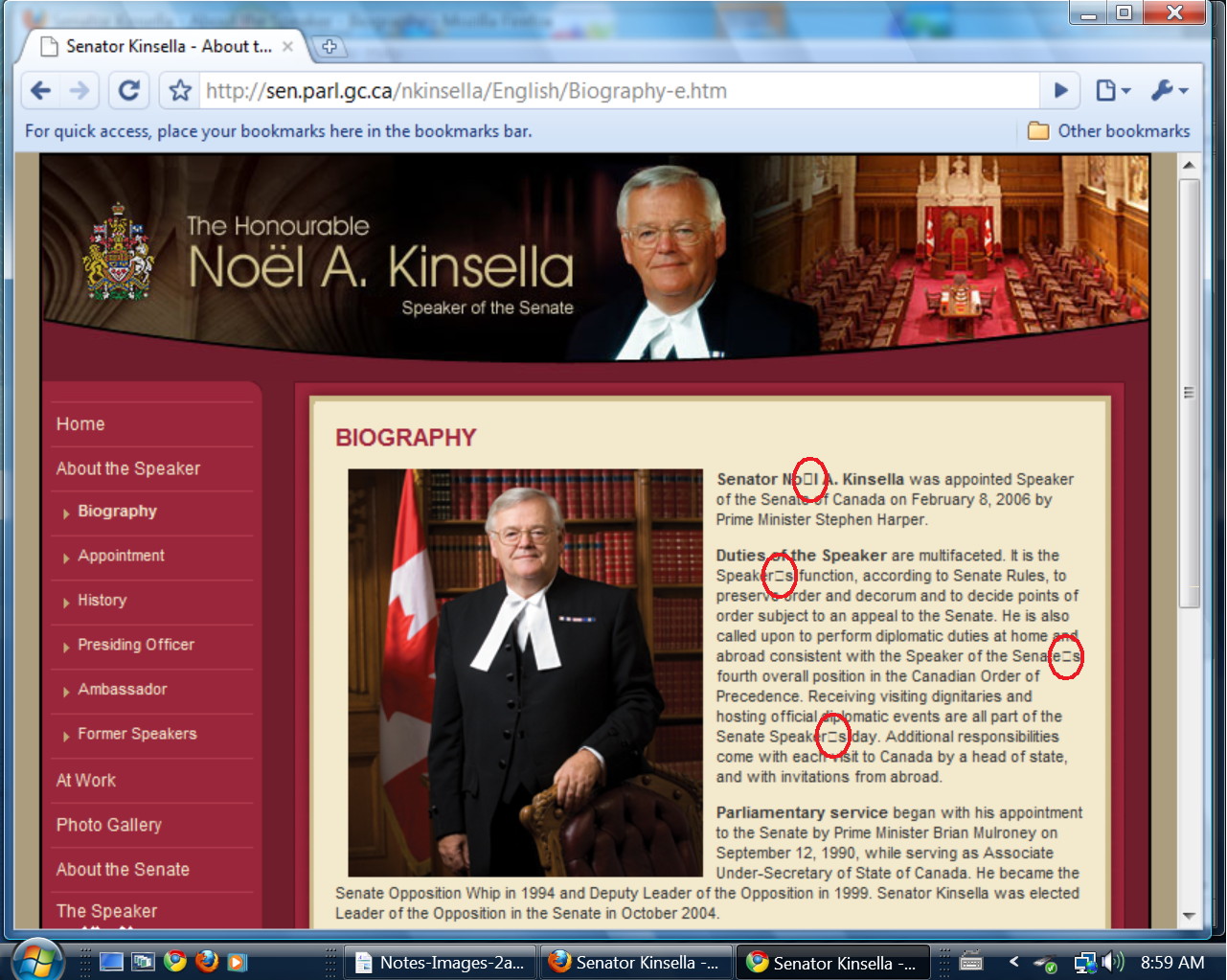
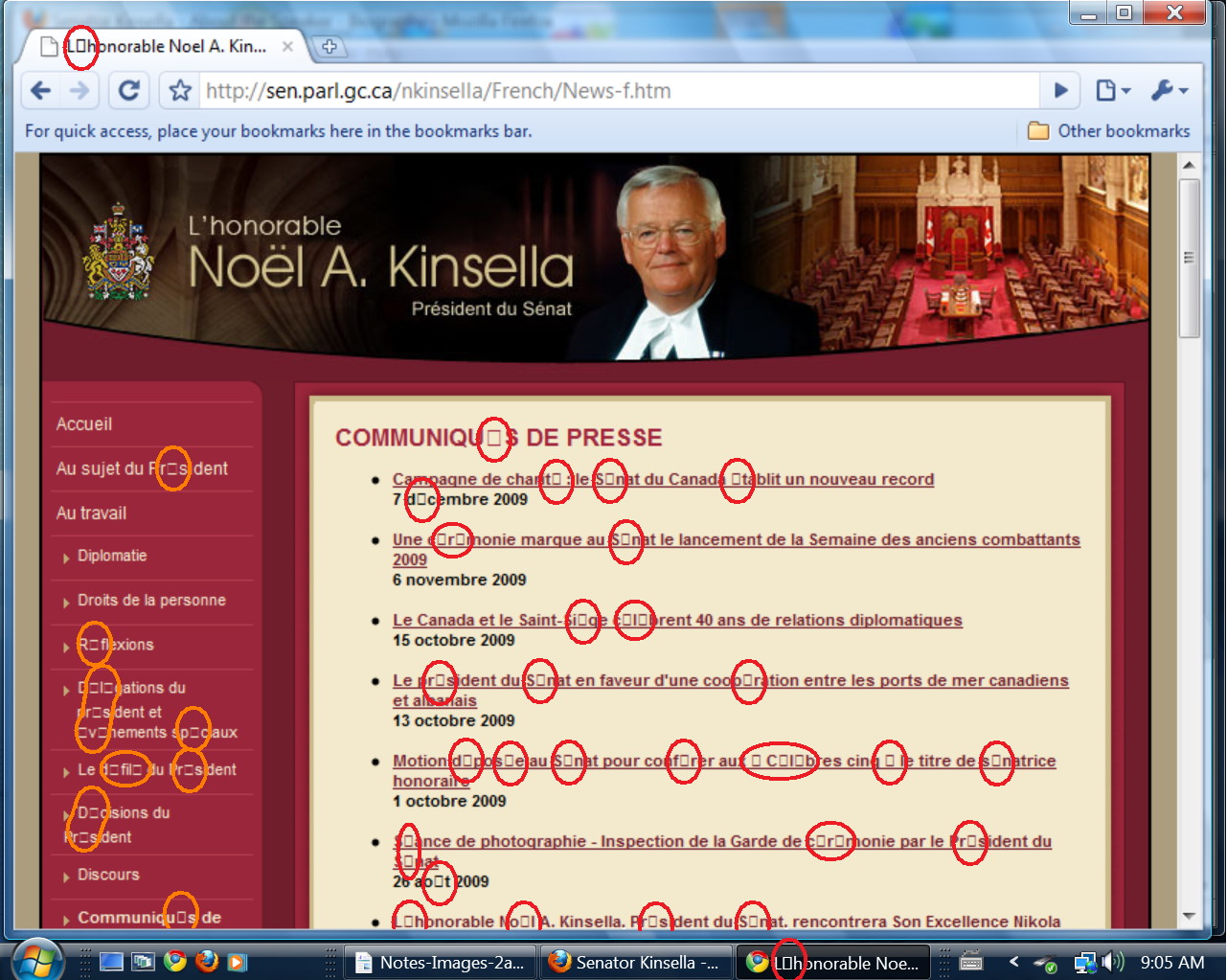
Deficient Government Website
In recent years, many countries have embraced open data initiatives, including both the United States and United Kingdom Others, such as Australia, have adopted open licences to make government content more readily usable and accessible. We have started to see the same thing in Canada at the municipal level, with Vancouver, Edmonton, and Toronto leading the way. Open government data is consistent with government transparency goals and holds great economic potential by inviting Canadian businesses to add value to public data. Canadian policy should encompass open government data, the removal of crown copyright or adoption of open licenses, and a commitment to equality for open source software procurement...
|
Senate's Dinosaur Website





2010 July 22
New South Shore Radio Station
CJHK 100.7 MHz FM
Acadia Broadcasting Limited launches Hank FM
CKBW moves to new North Street, Bridgewater, location
It's been an exciting summer of change in the radio broadcasting industry here on the South Shore. Acadia Broadcasting Limited, the company responsible for longtime South Shore broadcasting mainstay CKBW, officially launched its new radio station serving the South Shore on July 22, 2010.
CJHK, which will be known more popularly as Hank FM, is broadcasting at 100.7 MHz, offering a listening menu that includes today's best country music and yesterday's favourites. The new station also has its own fully staffed newsroom that will be providing coverage on matters close to the heart of South Shore residents.
The launch of the new station coincides with the migration of the Acadia Broadcasting Limited headquarters from its former location at the Gateway Plaza on Bridgewater's west side to new, state-of-the-art studios at 135 North Street, Bridgewater. Jim MacMullin, the vice-president of Acadia Broadcasting Limited, said the energy surrounding the new developments, both on the air and off, is palpable. "It's really exciting to finally launch our new station after two years of planning, approvals and construction," he said, via a press release.
"Hank FM will carry on the tradition of its sister station, CKBW, providing reliable local news, promoting community events and, now, playing the best variety of country music on the South Shore."
Acadia Broadcasting has had a presence in our region dating back more than 60 years. After several years of preparation, CKBW began transmitting in 1947 on Christmas Eve at 1000 kHz on the AM band. The first official broadcast took place two days later, at 8pm on Boxing Day, with president of the company and Lunenburg resident C.J. Morrow being the first to say, "Welcome to our listeners."
In the early days, Acadia Broadcasting had about a dozen employees at CKBW working under station manager John Hirtle. After decades of local success and a variety of formats over the years, the station flipped to the FM band in 2001, broadcasting at 98.1 MHz in Bridgewater.
John Wiles, the current manager for CJHK and its sister station, said that while getting new headquarters has been enough excitement on its own, being part of the launch of an entirely new station, which will cater to a very special demographic, is especially riveting.
"It's one thing to move CKBW to beautiful new surroundings," he said, "but it's even more amazing to launch a new station at the same time."
The first live broadcast from Hank FM began at 6am on July 22, 2010, with Nick Yorston reading the news, sports and weather. Mr. Yorston was immediately followed by morning announcer Jonathan Crouse, who played the first two songs, Hank Snow's "I've Been Everywhere" and Toby Keith's "How Do You Like Me Now?"...
Source:
Acadia Broadcasting Limited launches Hank FM, christens new North Street location by Patrick Hirtle, Lighthouse Publishing Company, 3 August 2010
Hank Snow Hits
Hank Snow
Hank Snow
2012 April 20
Rabbit ears become museum artifacts
Halifax Chronicle-Herald, 20 April 2012
CBC shuts down its analog TV transmitters by end of July 2012
Snow is in the forecast if you still watch CBC or Radio-Canada television using rabbit ears.
CBC is shutting down the last of its analog TV transmitters at the end of July in response to losing $115 million in the federal budget. This means viewers who have older TVs and do not have cable or satellite subscriptions will no longer receive a signal.
"In Canada, only 1.7 per cent of the population still receives our television signals via an analog, over-the-air transmitter," said CBC/Radio-Canada President Hubert Lacroix in a statement.
Shutting down the 620 analog transmitters will save ten million dollars, he said.
Angus MacKinnon, a CBC spokesman, said most people who still use rabbit ears "don't care" about TV. If they wanted to continue watching TV, they would have obtained a digital converter or subscribed to cable, he said.
Other broadcasters ended their analog transmission in major cities by 31 August 2011, as required by the CRTC. CBC converted its transmitters to digital in Halifax and 26 other markets. CBC/Radio-Canada applied for and received a one-year extension for a number of "secondary transmitters," including Radio-Canada in Halifax.
Analog is a dying technology. The United States and most of Europe now use digital transmitters, so the equipment is becoming scarce and expensive. Digital transmission provides better picture and sound and gives unlimited space for channels. Since digital uses fewer airwaves, this space is freed up for emergency communications and mobile phone services.
This airspace is owned by the federal government. In 2008, Ottawa auctioned off airspace to telecommunications companies, raising more than $4 billion. Industry Canada plans to begin the next round of auctioning in 2013, their website says.
In the United States, the government started a program to reimburse viewers who bought a digital converter for their TV sets. The money for the coupons was raised during a spectrum auction.
Scott Simms, the Canadian Heritage critic for the Liberal party, is concerned about where Canada's auction money will go.
"You would think some of that money would go back to supporting the people who will lose service," he said, as it did in the United States, but no such plan seems to be in the works.
"A lot of people are not going to have a service that they normally do," he said. "(The Conservative party) claim they're speaking up for people, but the attitude is 'fend for yourself.' "
A helpline set up by the federal government is no longer in service although some information is available at digitaltv.gc.ca.
MacKinnon said that getting rid of analog wasn't an easy decision to make.
Even though he expects the impact to be minimal, "we commiserate with people who will lose our services."
2013 March 01
Live Webcast “First Time”
Nova Scotia Liberal Party
Annual General Meeting live webcast
“For the first time, we will be sharing the
Friday night events with our membership online”

Tonight, Liberals from across Nova Scotia will meet many of our Liberal candidates for the first time. Liberal MLAs will take the stage, and our leader, Stephen McNeil, will deliver his keynote address to our membership as we head into an election year.
While we sincerely hope you are able to attend the Annual General Meeting and tonight's events, we would like to offer you the opportunity to watch the action live on our website. For the first time, we will be sharing the Friday night events with our membership online. We understand that not all Liberals will be available to attend the meeting in Halifax - with our live stream from the Westin, everyone can be part of the action.
To view, tune in HERE [] tonight at 7pm.

Halifax Mayor Mike Savage addressing the Liberal Party AGM 2013
2013 October 25
Greenwood-Kingston Movie Theatre Closes
Movies no longer available in 35 millimetre (analog) format
As of October 25, the Zedex movie theatre in Greenwood, Kings County, will be closed for an undetermined period of time. Susan Mackintosh, manager of the Zedex, said they found out earlier this week they couldn't access any 35 millimetre films to show and the agent was not hopeful another would arrive this way any time soon. The problem is the 1945 film projector, once a top-of-the-line model, but nearly obsolete now that the movie industry is increasingly releasing new titles in digital formats making film reel projectors a thing of the past. Finding new titles on 35 millimetre film is no easy task, she added. Movie studios only release a few titles on 35 millimetre film and there is a great demand for these films, she says. About 10 to 12 prints of these films are distributed across Canada and the competition is fierce among smaller theatres. A new digital projector is estimated to cost as much as $50,000 and Mackintosh says that taking on a capital expense that large is not on the books for the business at this time. Until recently the Zedex has been able to maintain access to new titles through cooperation with two other theatres in Nova Scotia, but these two theatres were converting to digital formats. Without a new digital projector, it is likely that the Zedex Theatre will be forced to close permanently. The last film, Prisoners, showed for the final night yesterday, Thursday, October 24 and the doors will close today, October 25, 2013.
—Source: “Zedex to close for foreseeable future”
in the Annapolis County Spectator website, 25 October 2013

2015 May 14
The first modern fiber optic cable in more than a decade
connecting North America to Europe
The 4,600-kilometre cable, which Capacity Magazine – a publication of Capacity Media, a company focused on the wholesale telecommunications industry – named the top telecommunications project for 2015, will connect Halifax, Nova Scotia, to Cork, Ireland, and Slough, England. It's said to be the first modern fiber optic cable connecting North America to Europe in more than twelve years, catering to the need for additional fast and high-performing global network capacity.
References:
• Greg's Cable Map
• Discovery made an excellent documentary on a cable-laying ship
doing maintenance, it's called Mighty Ships: Tyco Resolute.
Mighty Ships - Tyco Resolute - Number 7, Season One
•
Submarine (underwater) communications cable
• Hibernia Networks
|
This webpage has been archived
History of Nova Scotia: Chapter 82
with special attention given to
Communications and Transportation
These links were accessed and found to be valid on 1 November 2013.
|
  Hits per calendar month
       2015 Apr   166
       2015 Mar   161
       2015 Feb   167
       2015 Jan   168

       2014 Dec   246
       2014 Nov   359
       2014 Oct   416
       2014 Sep    -
       2014 Aug    -
       2014 Jul    -
       2014 Jun    -
       2014 May    -
       2014 Apr    -
       2014 Mar    -
       2014 Feb    -
       2014 Jan    -

       2013 Dec    -
       2013 Nov    -
       2013 Oct   113
       2013 Sep   121
       2013 Aug   102
       2013 Jul   115
       2013 Jun   125
       2013 May   204
       2013 Apr   197
       2013 Mar   147
       2013 Feb    74
       2013 Jan   128

       2012 Dec   104
       2012 Nov    87
       2012 Oct    94
"-" means data is not available
Index with links to the other chapters
Go To: History of Telegraph and Telephone Companies in Nova Scotia
http://ns1758.ca/tele/telephone.html
Go To: History of Railway Companies in Nova Scotia
http://ns1758.ca/rail/railways.html
Go To: History of Electric Power Companies in Nova Scotia
http://ns1758.ca/electric/electric.html
Go To: History of Automobiles in Nova Scotia
http://ns1758.ca/auto/automobiles.html
Go To: Nova Scotia History, Chapter One
http://newscotland1398.ca/hist/nshistory01.html
Go To: Nova Scotia in the War of 1812
http://ns1758.ca/1812war/war1812-atlantic.html#war1812-novascot
Go To: Nova Scotia Historical Biographies
http://newscotland1398.ca/hist/nshistory00.html#ns-historical-biog
Go To: Proclamations: Land Grants in Nova Scotia 1757, '58, '59
http://planter2010.ca/proc/proclamations-ndx.html
Go To: Statutes of Nova Scotia, 1805, edited by Richard John Uniacke
http://ns1763.ca/law/ns-statutes1805-titlepg.html
Go To: Home Page
http://newscotland1398.ca/index.html
Moved to new hosting company: 2011 June 12
Latest update: 2015 May 18
<


